About
What Experience Do You Have?
Research across Norway, England, Colonial US, Germany, the Netherlands, and Dutch Jewish records.
My first record found
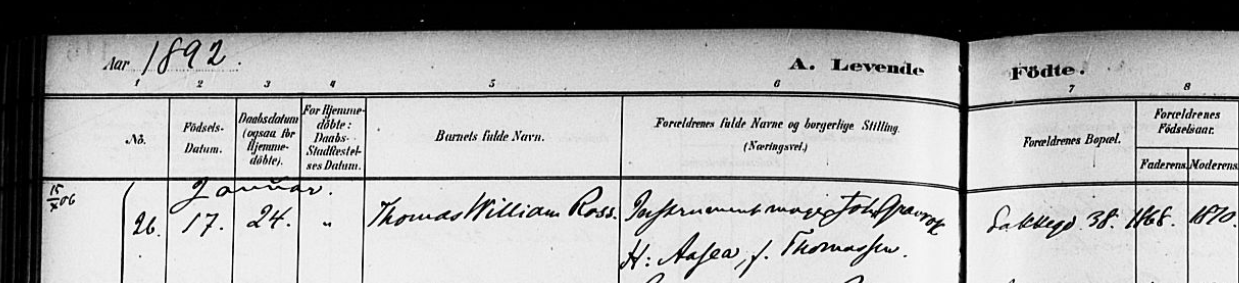
The front page detailed a bit of my experience with this record. But there is more to this story. In a mea culpa, I admit to the fact that I was entirely flummoxed when presented with those Norwegian parish registers. Who knew that Norwegian records would be written in Norwegian and not English. Thankfully a kind worker hooked me up with a Norwegian-to-English cheat sheet, and along with helping me to thread a microfilm reader I was successful that day.
David's starting point
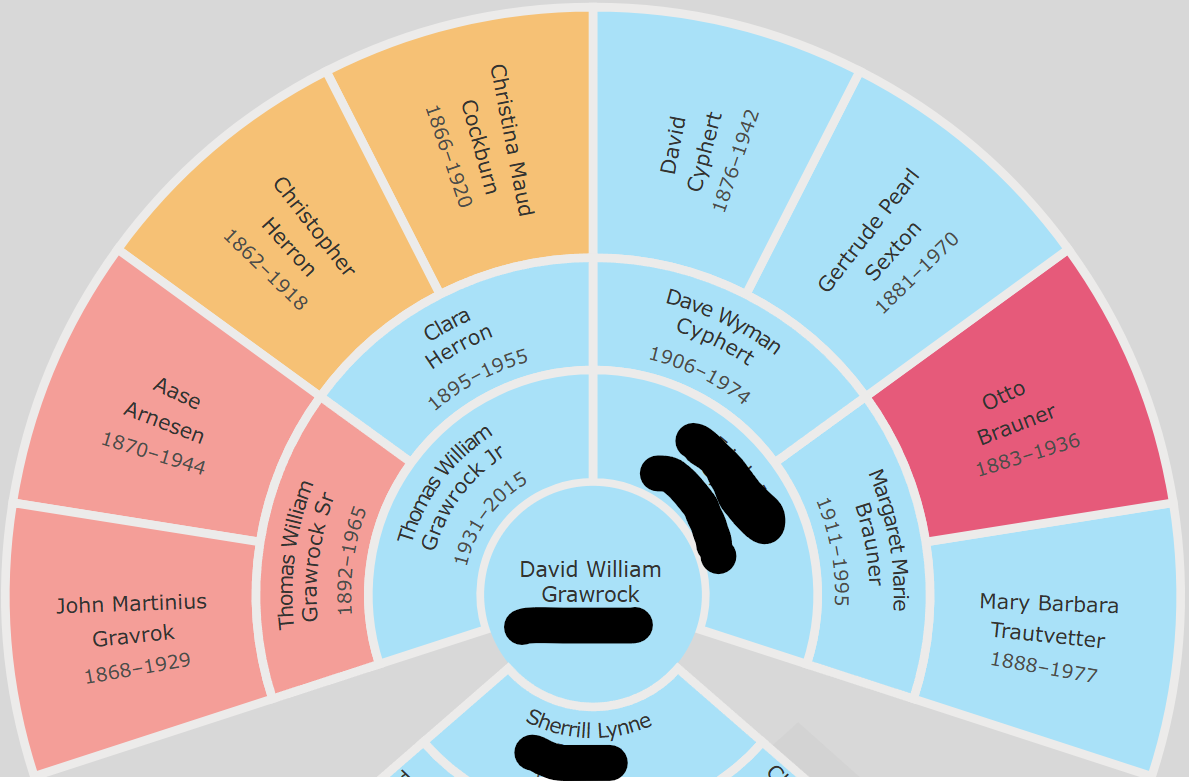
This fan chart is a bit misleading as at the start I didn't have dates for these individuals. I had a few but details were very sparse.
So I started researching. I found that Norwegian parish records go back easily to the 1600s and after learning to read them, that part of the fan chart fleshed out nicely. But each section taught me something new. Herron-Cockburn is from Northeast England — I learned about different census records, Church of England registers, and bishop's transcripts. The Cyphert-Sexton are Colonial with an 1800s Irish branch. I learned about pre-revolution immigration, revolutionary soldiers, and how Pennsylvania Dutch aren't Dutch but German. Brauner-Trautvetter are German — more immigration records, emigration port records, and how old German handwriting isn't quite the same as Norwegian, though they are very close at times.
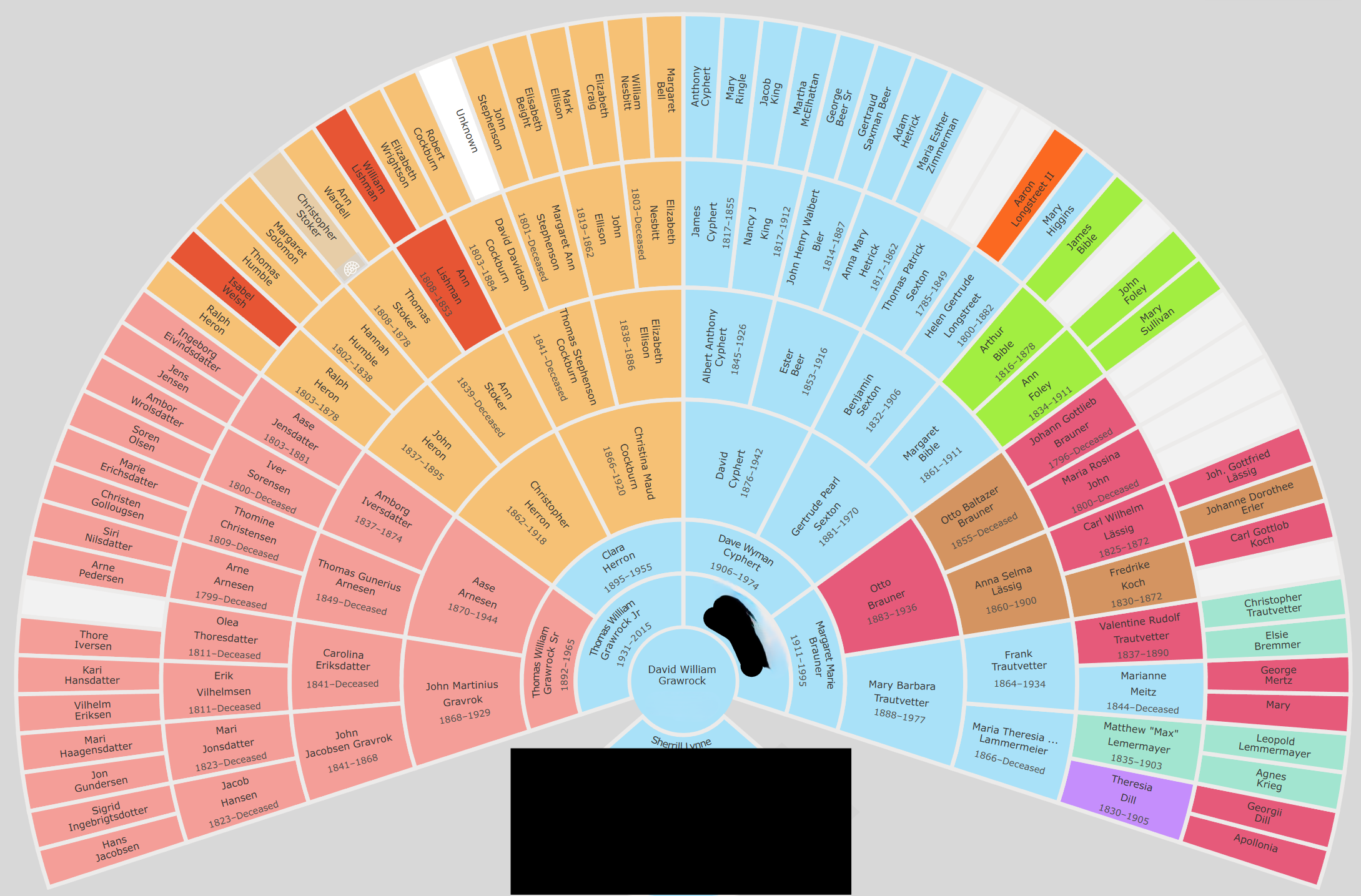
That is certainly a change from the starting point. Still some gaps, but they are difficult genealogical problems. For instance, the Norwegian gap is due to a parish fire that destroyed 70 years of records. While there are older records, there isn't a reliable trail from the younger generation to their grandparents. Add in the difficulty with patronymics instead of surnames, and you have a hole in the fan chart. Research continues on all lines. The Level Up work goes back to ensure a level of consistency in the research performed many years ago.
Sherrill's starting point
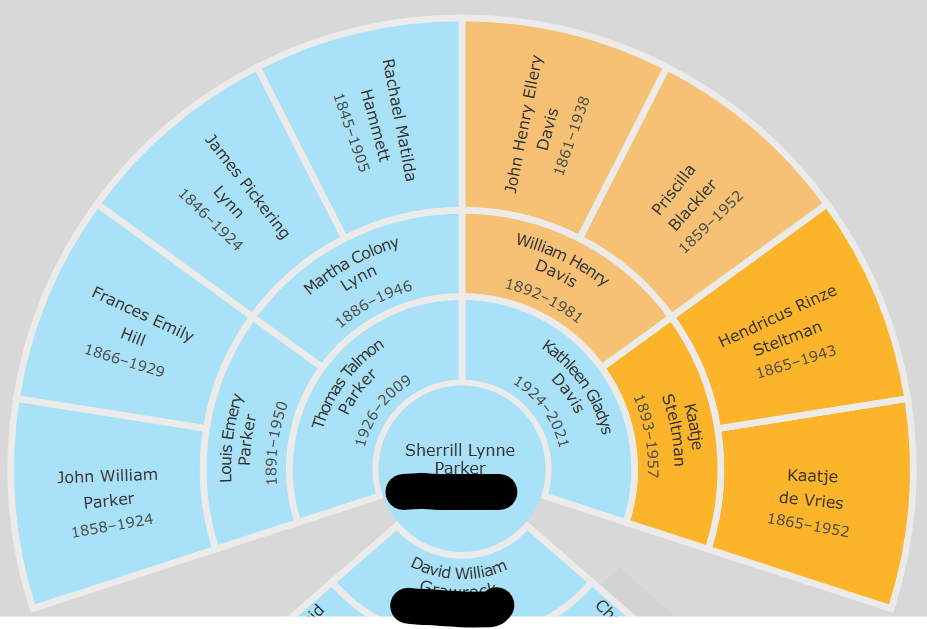
But our experience didn't end with just my genealogy — we worked Sherrill's too. Here we had some help as Sherrill's mom was a dedicated, if slightly gullible, researcher. On her father's side, those are Southern roots: Oklahoma, Mississippi, Alabama, and Georgia. Getting them out of the South has been difficult. Her mom's side is Southeastern English — Devon and Cornwall — and Dutch. From this research we learned about burned counties, boundary changes, land records, and wills.
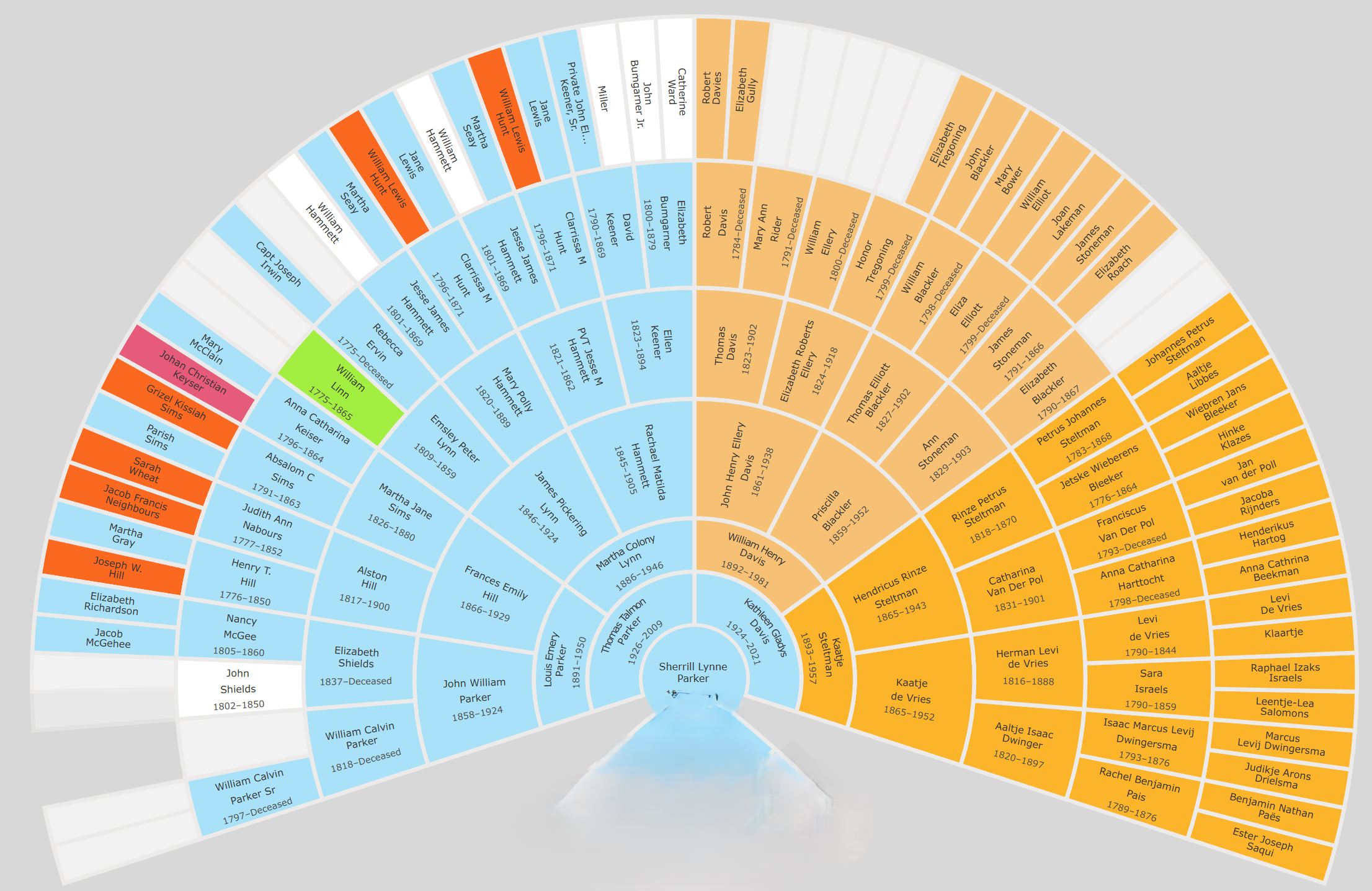
The Dutch side provides a fascinating look at how families lose information over time. Sherrill's mom had heard that there might be some Dutch Jews in the ancestry but nothing had ever been fully researched.
Discoveries
In conjunction with my certification portfolio, I was looking for a family to use for the KDP, or 3 generations, and I looked at one of Sherrill's Dutch ancestors, Herman Levi de Vries. He had 15 children, 13 of which had families of their own. Well that was too big for the KDP but I found something. Herman was Jewish. Not a surprise with a middle name of Levi, but we hadn't really known that.
What we found is that being a Dutch Jew in 1940 puts the family in the middle of the Holocaust. The result was a deep dive into the Arolsen Archives, Yad Vashem, the Holocaust Memorial Museum, and the record keeping of the Dutch. The information led to my first genealogical book, Herman Levi de Vries, a Lost Family. We had no idea that Sherrill's family was decimated in the Holocaust. That brought the Holocaust from something that happened to others to: her family was lost in Auschwitz, Sobibor, and others.
From that simple starting point, David and Sherrill started to fill out their fan charts. What that taught them was how to research in Norway, Pennsylvania, New Jersey, Colonial New Amsterdam, Northeast and Southwest England, Germany, Southern states, the Netherlands, and Dutch Jewish records.
More About White Dome
Name
How and why did you pick White Dome as the company name?
Purpose
Why do genealogy and why teach genealogy.
Experience
What experience do you have in research and genealogy in general.
Level Up
Description of the level up process along with a scorecard.
Education
Where did you learn to do genealogy? How did you get your certification?
Technical
What did you do before being a genealogist?
Personal
What is your family like? What do you do besides genealogy?